


For an average priced house in the UK the total cost of moving sits somewhere between £12,000 and £15,000 once everything is added up, and it climbs fast as the property price rises because stamp duty takes the biggest bite. That surprises most people, and it is why we ask every home mover to run the numbers through our moving costs calculator before they start viewing. Breaking the total into individual costs makes it manageable and shows you where you can save money.
Stamp Duty Land Tax Stamp duty applies when you buy in England or Northern Ireland and is paid by the buyer within 14 days of completion. Home movers pay 0% on the first £125,000, 2% on the portion from £125,001 to £250,000, 5% from £250,001 to £925,000, 10% up to £1.5 million and 12% above that. On a £350,000 purchase the bill is £7,500, on £450,000 it is £12,500. First time buyer relief does not apply once you have owned a home, and if you complete before your old home sells you pay a 5% surcharge that can be reclaimed later.
Solicitor and Conveyancing Fees Because you are selling one property and buying another you pay two sets of legal fees. Expect £600 to £1,000 for the sale and £1,000 to £1,800 for the purchase once searches, Land Registry fees and transfer charges are included. Leasehold properties cost more because of the extra work with the freeholder or management company. Using one firm for both transactions is usually a little cheaper and keeps the chain moving in step.
Estate Agent, Survey and Removal Costs Estate agents typically charge between 1% and 1.5% of the selling price plus VAT, around 1.4% all in, though this is negotiable and online agents charge a flat fee instead. A Level 2 HomeBuyer survey costs £400 to £1,000 and a Level 3 building survey £630 to £1,500. Removal costs range from about £500 for a small flat to £1,400 for a large family house, depending on size and distance. If your existing mortgage is inside a fixed rate, check the exit penalty before agreeing a completion date, because porting the mortgage or moving a month later can save thousands.
Moving home guide
I have sat with hundreds of home movers over the last 15 years and the same thing happens every time: they know roughly what their house is worth and roughly what they want to spend, but nobody has added up the moving costs in the middle. On an average move those costs are regularly £15,000 to £25,000. This guide explains every expense the moving costs calculator asks for, where the numbers come from, and how they feed into the mortgage you will actually need, so nothing is left out and nothing is double counted.
Enter a realistic property value for the house you are selling (use recent sold prices on your street, not the highest asking price you have seen), the balance left on your existing mortgage and any savings you want to put towards the move. The calculator works out how much money your sale will release by taking the mortgage away from the property value.
Enter the purchase price of the home you are moving to. If you are still looking, put in the top of your budget so you can see the worst case for stamp duty and the mortgage required.
This is where the surprises hide. Exit penalties, two sets of legal fees, estate agent fees, stamp duty, a survey and a removal company. Each one is explained below with typical 2026 costs so you can fill in a sensible estimate before you have quotes.
Total available funds is the money from your sale plus savings minus every moving cost. That becomes your deposit on the new house. Mortgage required is the purchase price minus that deposit, and the loan to value (LTV) tells you which pricing band you fall into with lenders. A lower LTV normally means lower interest rates and lower monthly mortgage repayments.
The single biggest cost after stamp duty. High street estate agents typically charge 1% to 1.5% of the property value plus VAT, which works out at around 1.4% all in. On a £350,000 house that is roughly £5,000. Online agents charge £1,000 to £2,000 up front but you do more of the work yourself and pay whether or not the house sells. Everything is negotiable, so compare quotes from three estate agents, particularly on higher value properties.
You pay conveyancing solicitors or a licensed conveyancer for both the selling and the buying side. Budget £600 to £1,000 in conveyancing fees for the sale and £1,000 to £1,800 for the purchase including searches, Land Registry fees and disbursements such as bank transfer charges. Leasehold flats cost more because of the extra paperwork with the freeholder. Using one conveyancer for both transactions usually saves money and keeps the whole process moving in step.
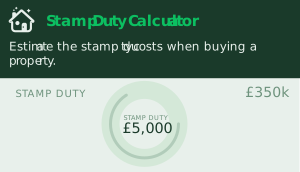
Home movers pay Stamp Duty Land Tax at 0% on the first £125,000, 2% up to £250,000, 5% up to £925,000, 10% up to £1.5 million and 12% above that. A £400,000 purchase costs £10,000, a £450,000 purchase costs £12,500. First time buyer relief does not apply once you have owned a home. Use our stamp duty calculator to see how much stamp duty you will pay, then paste the amount into the field above.
Your lender's valuation only protects the lender. A RICS Level 2 HomeBuyer survey costs £400 to £1,000 and suits most conventional homes. A Level 3 building survey costs £630 to £1,500 and is worth it for older, extended or unusual properties. Skipping the survey to save £600 is how people end up with a £15,000 roof bill in year one.
Many of the lowest rate mortgages carry an arrangement fee of £999 to £1,499, and some lenders add valuation fees of £100 to £300 on higher value properties. Arrangement fees can be added to the loan amount, but you then pay interest on them for the whole mortgage term. We always compare the fee and fee free versions side by side because the cheapest headline interest rate is not always the cheapest mortgage.
If you are inside a fixed or discounted rate, repaying your existing mortgage can trigger an exit penalty of 1% to 5% of the balance, which on a £200,000 loan is £2,000 to £10,000. Porting your mortgage to the new property usually avoids this, and timing completion for just after the rate ends can remove it entirely. Check your mortgage terms or ask us to.
A professional removal company typically charges £450 to £550 for a one or two bedroom property, around £800 for a three bedroom house and £1,100 to £1,400 for four or five bedrooms. Packing services, packing materials, long distance mileage, storage between completion dates and Friday moves all push removal costs up. Compare quotes from three removal companies and book early because the good ones fill up around month end.
An Energy Performance Certificate for the house you are selling (£60 to £120), Royal Mail redirection to your new address (£40 to £85), cleaning, new locks, buildings and contents insurance from exchange, council tax and utility bills overlapping for a week or two, and the inevitable trip to buy curtains and a fridge that fits. Allow at least £1,000 on top of the calculator estimate for these additional costs alone.
Here is a typical case we see. A couple sell their house for £350,000 with £200,000 left on the mortgage, which releases £150,000. They have £15,000 in savings and are buying a property at £450,000.
| Cost | Estimate |
|---|---|
| Early repayment charge (mortgage ported) | £0 |
| Solicitor fees, selling | £900 |
| Solicitor fees, buying (including searches) | £1,500 |
| Estate agent fees (about 1.4% including VAT) | £5,000 |
| Stamp duty on £450,000 | £12,500 |
| Level 2 survey | £600 |
| Removals | £1,000 |
| Total moving costs | £21,500 |
£150,000 from the sale plus savings of £15,000 minus moving costs of £21,500 leaves £143,500 available as a deposit. The mortgage required is £450,000 minus £143,500, which is £306,500 at 68% loan to value. That sits inside the 70% LTV pricing band. Adding another £14,000 of deposit would bring the loan under 65% and unlock the next band of rates, which is exactly the sort of decision the calculator helps you make before you start viewing.
Notice that stamp duty alone is more than half of the total. It is the one cost people forget and the one you cannot negotiate, so run it first.
Most mortgages are portable, which means you can move your existing rate to the new property and avoid the early repayment charge. You still have to reapply and pass the lender's affordability checks, and if you need to borrow more, the extra is placed on a new rate as a separate part of the loan.
If your existing interest rate is lower than anything on the market and you have a year or more left on it, porting is normally the right answer. The interest you save plus the exit penalty you avoid can run to several thousand pounds.
If your rate is ending within six months, if your existing lender will not lend you enough for the new house, or if interest rates have fallen below what you are paying, a fresh mortgage from the whole market can beat porting even after the penalty. We run both routes side by side for every mover.
Moving up usually means borrowing more. Lenders will typically lend 4 to 4.5 times household income, sometimes more for higher earners, and they stress test the payments at a higher rate. Our mortgage borrowing calculator gives you a starting estimate of how much you can borrow based on your income, and we firm it up with a Decision in Principle before you offer.
Negotiate the estate agent fee. Ask three agents to pitch and tell each one what the others quoted. Half a percent on a £350,000 sale is £1,750.
Time your move around your mortgage rate. Completing a month after your fixed rate ends can save a five figure exit penalty. If you cannot wait, port it.
Use one conveyancer for sale and purchase. Cheaper, and one person chasing both chains instead of two firms blaming each other.
Check the stamp duty bands before you offer. Offering £249,000 rather than £252,000 is not just £3,000 off the price, it is also £120 less tax. On the bigger thresholds the difference is far larger.
Do not pay for the wrong survey. A Level 2 is enough for most modern houses. Save the Level 3 for the Victorian terrace with the wonky floor.
Compare fee and fee free mortgages. On a smaller loan a fee free mortgage at a slightly higher interest rate is often cheaper over the fixed period. Our mortgage calculators let you compare both in seconds.
Use a fee free broker. Plenty of brokers charge £300 to £995 for arranging a mortgage. We do not on standard residential cases, because the lender pays us. That is one moving cost you can strike off the list entirely.
For an average priced house the total is typically £12,000 to £15,000 once stamp duty, estate agents, legal fees, survey and removal costs are added up, and it rises quickly with the property price because stamp duty is the biggest component. Our moving costs calculator gives you an estimate for your own numbers in under a minute.
Not directly. Stamp duty, legal fees and removal costs have to be paid in cash. What you can do is put less of your sale proceeds down as a deposit and borrow more, which has a similar effect but pushes up your loan to value and possibly your interest rate. Arrangement fees are the one cost that can normally be added to the loan amount.
No. Stamp duty is only paid by the buyer, so you pay it on the home you are buying, not the one you are selling. If you complete on the new home before your old one sells you will be charged the 5% additional property surcharge, which you can reclaim once the old home sells within 36 months.
Before you put your house on the market. We can check what your existing lender will let you port, what the whole market would lend you based on your income, and whether your budget for the new house is realistic once every cost is included. Getting a Decision in Principle at this stage also makes your offer far stronger.
If the house sells for less or the mortgage balance is higher, your available funds shrink and your loan to value rises. A jump from 74% to 76% LTV can move you into a more expensive pricing band, so we always model a lower property value alongside the hoped for one. Getting an accurate valuation from three estate agents at the start avoids most of these surprises.
Yes, and nothing is saved or sent to us, so you do not need to enter any personal details. Change the numbers as often as you like. When you want an estimate checked by a person, book a free appointment and we will go through it with you.
Plan your house move
The moving house cost calculator above tells you what your moving costs will be and how much mortgage you need. This part of the guide covers everything around it: how lenders decide what you can borrow, the insurance you need in place, how the conveyancing process works, and an easy week by week plan so nothing gets forgotten. It is the checklist our experts run through with every home mover we help, and the same tools we use ourselves.
Most lenders will lend around 4 to 4.5 times your household income, and some stretch to 5 or 5.5 times for higher earners or certain professions. Basic salary counts in full. Bonus, overtime and commission are usually counted at 50% to 100% depending on the lender, and self employed income is averaged over two years. Small differences in how income is treated can change your loan amount by tens of thousands of pounds, which is why we compare lenders rather than guess.
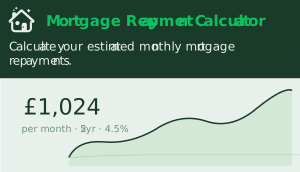
Lenders stress test your monthly mortgage repayments at a higher interest rate than the one you will actually pay, to make sure you could cope if rates rose. The bigger the loan, the more that test bites. Our mortgage repayment calculator shows the monthly repayments for any loan amount, interest rate and term so you can see whether the new house is comfortable rather than just possible.
Your deposit as a percentage of the property value sets your loan to value band, and rates step down at 90%, 85%, 80%, 75%, 70% and 60%. A bigger deposit does not just lower the loan, it can move you into a cheaper band. If the moving costs calculator puts you at 76% or 81%, it is worth asking whether a small top up from savings would get you under the line.
Nearly every home mover takes a repayment mortgage, where the loan is cleared by the end of the term. Interest only is possible on a residential property but lenders want a large deposit, a high income and a credible plan to repay the capital, so for most movers it is not the route. Our guide to mortgage repayment types explains the difference.
Extending your mortgage term from 20 to 30 years lowers the monthly payments and can help you pass affordability on a bigger property, but you pay more interest overall. Many lenders allow terms into your late 60s or 70s if your income supports it. We look at the total cost over the term, not just the monthly payment, before recommending it.
Our free online mortgage calculators are easy to use and designed to work together as one set of tools for planning your moving costs. Start with the borrowing calculator to estimate how much you can borrow, use the stamp duty calculator to see how much stamp duty you will pay, then come back to this moving calculator to pull the whole budget together. The loan to value calculator and all our mortgage calculators are free and need no personal details.
Your lender will insist buildings insurance is in place from the day you exchange contracts on the new property, not the day you move in, because from exchange the house is your risk. Budget £150 to £400 a year depending on the size, age and location of the house. Compare quotes online rather than accepting the policy your lender or estate agent offers.
Check whether your contents insurance covers your belongings while the removal company has them. Most policies do not, or only for a limited amount, so ask the removal company what their goods in transit cover includes and whether fragile or high value items need to be declared. Then update the policy to your new address from moving day.
A bigger mortgage means a bigger gap if something happens to you. We review life cover, critical illness cover and income protection with every mover so the monthly repayments would still be met if you could not work. You are never obliged to take cover through us, but you should know what protects the house and what does not.
As soon as your offer is accepted, instruct conveyancing solicitors or a licensed conveyancer to handle the legal side of both the sale and the purchase. Compare quotes on the full cost including disbursements, not just the headline fee, and ask how quickly they typically get to exchange.
Your conveyancer orders local authority, drainage and environmental searches on the new house and raises enquiries with the seller's solicitor. Meanwhile we submit your full mortgage application, the lender values the property and issues the mortgage offer. This stage typically takes four to eight weeks.
Once everyone in the chain is ready, contracts are exchanged and the completion date is fixed. You pay your deposit to your conveyancer, buildings insurance must start, and pulling out after this point means losing that deposit. This is also the moment to confirm your removal company booking.
On completion day the lender releases the mortgage money, your conveyancer pays off your existing mortgage, settles the stamp duty and the estate agent, and sends the balance to the seller's solicitor. Once the money lands you get a call to collect the keys from the estate agent. Most movers complete on a Friday, which is exactly why removal companies charge more for it.
Eight weeks before. Run the moving house cost calculator with realistic numbers, speak to us about a Decision in Principle, and get a valuation from three estate agents so you know the true property value rather than the optimistic one. Find out early whether your moving costs leave enough deposit for the house you want.
Six weeks before. Instruct your conveyancer, book your survey, and compare quotes from at least three removal companies. Ask each one for a personalised quote based on the size of the house, the distance and whether you want packing services or just the van and crew.
Four weeks before. Start decluttering, because every box you do not move saves money. Order packing materials, or ask the removal company to include them. Tell your existing lender you are moving if you plan to port the mortgage.
Two weeks before. Confirm the completion date with your conveyancer and the removal company. Arrange buildings insurance to start on exchange. Set up Royal Mail redirection to your new address and start a list of everyone who needs the new details: bank, employer, DVLA, GP, insurers.
One week before. Pack everything except the essentials, label boxes by room, and take photos of meter readings at the old house. Tell your council tax office and utility suppliers your moving date so the bills are split correctly and nothing is charged twice.
Moving day. Read the meters at both properties, keep the kettle, chargers and important documents with you, and do a final walk round the old house before handing the keys to the estate agent. Completion money can land any time from late morning to mid afternoon, so plan for a wait.
The first week in your new house. Register for council tax, set up utility bills in your name, change the locks, and check the mortgage payment date so the first monthly repayment does not catch you out. Then put a note in the diary for six months before your fixed rate ends, when we will review the best mortgage options for you again.
Buying a bigger house means higher stamp duty, a bigger loan and usually a larger removal van. Rising house prices in your local area help your sale but hurt your purchase, so the gap between the two is what matters, not the headline numbers.
Selling a larger property and buying a smaller one can release a lot of money and cut your monthly repayments or clear the mortgage entirely. Stamp duty on the new house and selling costs still apply, but the calculator will often show a deposit far bigger than you need, which opens up the cheapest interest rates on the market.
If you complete on the new house before the old one sells, HMRC treats it as an additional property and adds a 5% stamp duty surcharge. You can claim it back once the old house sells within 36 months, but you need the cash up front. Bridging or a let to buy mortgage can make this work in the right circumstances.
Stamp Duty Land Tax only applies in England and Northern Ireland. Scotland charges Land and Buildings Transaction Tax and Wales charges Land Transaction Tax, with different thresholds, so swap the stamp duty field for the right tax if your new address is over the border. Everything else in the calculator works the same.
Removal costs rise with mileage and the size of the house. A move across town might be £800 for an average three bedroom house, while a 200 mile move with an overnight stop can be £2,000 or more, and storage between completion dates adds to that. Compare quotes early because long distance dates book up fastest, and ask what moving services are included in the price.
If you are not selling a house, ignore the first section of the calculator and enter your savings as the deposit. First time buyers pay no stamp duty up to £300,000 and have no selling costs, so the totals are far lower. Our first time buyer mortgages page covers the rest.
As accurate as the details you put in. Stamp duty is exact if you use our stamp duty calculator. Estate agent fees, conveyancing and removal costs are estimates until you have quotes, so use the average costs in this guide first and replace them as real quotes arrive. Every major expense of moving house is considered, but unusual extras like storage or a second removal van are for you to add.
Yes. Estate agent fees, the exit penalty on your existing mortgage and the legal fees for your sale are selling costs. Stamp duty, the survey and the legal fees for your purchase are buying costs. Removal expenses sit in the middle. The cost calculator adds all of them together to give the full cost of moving, so you can see the whole process in one set of numbers.
The big three are the exit penalty on the existing mortgage, the stamp duty surcharge when a sale falls through and you complete first, and repairs flagged by the survey that the seller will not fix. Smaller additional moving expenses are overlapping council tax and utility bills, storage, and the deposit some removal companies take when you book. All of them are easy to miss and easy to plan for once you know they exist.
Yes. Book a free appointment and our experts will go through your income, savings, existing mortgage terms and the property you have in mind, then help you find the right mortgage options, the monthly repayments and a full moving costs budget in writing. Our advice is fee free on standard residential moves, so the only thing it costs you is half an hour.
Whatever stage you are at, a quick call with our mortgage experts is the easiest way to find out where you stand and what moving will really cost. Contact us or call 03300 432 428 and we will help you plan the move properly.
Speak to one of our fee free mortgage advisers today. We will check what you can port, what the whole market will lend you and what your move will really cost, then help you move forward with confidence.